

Understanding the difference between 22K and 24K gold helps you make informed decisions when selling your gold items. Gold purity directly influences the metal’s value, but the final selling price also depends on weight, the current gold rate, and the buyer’s evaluation. Knowing how purity is calculated can help you understand your gold’s worth before finalising a transaction. With a transparent valuation process, Radhvica Gold helps customers make confident decisions when selling their precious metals.
What Is the Difference Between 22K and 24K Gold?
Gold purity refers to the proportion of pure gold present in an item, measured using the karat system on a scale of 24 parts. Although both 22K and 24K gold have significant value, their composition makes them suitable for different purposes.
- 22K gold: Contains approximately 91.6% pure gold and 8.4% other metals, making it suitable for jewellery that needs additional strength.
- 24K gold: Contains approximately 99.9% pure gold and is commonly used for investment bars and coins because of its high purity.
Since 24K gold contains more pure gold per gram than 22K gold, it generally commands a higher price per gram when comparing equal weights at the same reference rate.
How Does Gold Purity Influence Your Selling Price?
Gold purity plays a key role in calculating its market value and the final selling price. For example, a 10-gram piece of 22K gold contains approximately 9.16 grams of pure gold, while 10 grams of 24K gold contains approximately 9.99 grams.
However, a higher karat does not automatically guarantee a higher total payment. The actual amount depends on the item’s net gold weight, verified purity, applicable market rate, and any relevant deductions.
If you want to sell gold in Mathikere, understanding these factors helps you evaluate the offered price and compare it with the current gold rate.
22K vs. 24K Gold: A Quick Comparison
Feature | 22K Gold | 24K Gold |
Gold purity | Approximately 91.6% | Approximately 99.9% |
Other metals | Approximately 8.4% | Very small proportion |
Common uses | Jewellery, ornaments | Investment bars and coins |
Durability | Generally harder | Softer and more malleable |
Value per gram | Generally lower at the same reference rate | Generally higher at the same reference rate |
Selling valuation | Based on verified purity and net gold weight | Based on verified purity and net gold weight |
Note: Actual selling prices vary with market rates, testing results, item composition, and the buyer’s valuation policy.
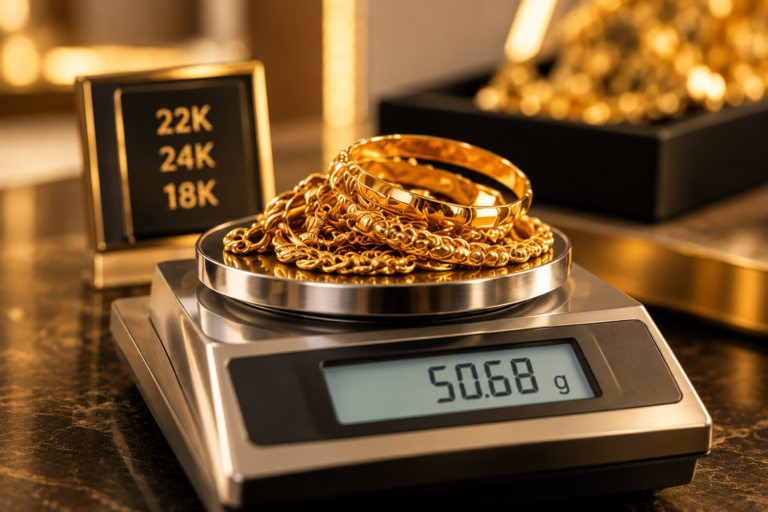
What Factors Influence the Final Gold Selling Price?
Gold purity is important, but several other factors also influence the final amount you receive when selling your gold. Before accepting an offer, consider the following:
- Current gold rate: The prevailing rate provides a reference for calculating the metal’s value.
- Net gold weight: The weight of the actual gold content matters more than the item’s overall weight when non-gold components are present.
- Purity verification: Professional testing helps establish the gold content and supports an accurate valuation.
- Deductions: Stones, non-gold components, and applicable processing or other disclosed charges may affect the final amount.
- Transparency: A clear breakdown helps you understand how the offered price has been calculated.
When comparing the Best gold buyers in Bangalore, look beyond the quoted rate and check whether the purity, weight, and final payable amount are explained clearly.
How Radhvica Gold Helps You Understand Your Gold's Value?
Radhvica Gold helps customers approach gold selling with greater clarity by focusing on purity assessment, weight verification, and valuation based on the applicable gold rate. Whether you own 22K jewellery, higher-purity gold, or old ornaments, understanding the composition of your items is essential before accepting an offer. Customers can understand their gold’s value by enquiring about the purity testing process, applicable deductions, and final selling price before completing the transaction. Choosing a buyer who communicates the valuation clearly can make the selling experience more straightforward and reassuring.
Tips before Selling Your 22K or 24K Gold
Keep these practical points in mind before completing your transaction:
- Check the latest gold rate for your jewellery’s purity before selling to understand its current market value.
- Ask how the gold’s purity will be tested.
- Confirm the net weight used for valuation.
- Request a clear explanation of deductions, if any.
- Compare the final offer rather than relying only on the advertised rate.
- Review the payment terms and transaction documentation.
These steps can help you evaluate offers confidently, whether you are selling a single ornament or several gold items.
Conclusion
The key difference between 22K and 24K gold lies in their pure gold content, which directly influences their value per gram. Nevertheless, the final selling price depends on verified purity, net weight, market rates, and the buyer’s valuation process. Understanding these details helps you make a better-informed decision instead of relying on karat value alone.
Know your gold’s true worth with a transparent valuation from Radhvica Gold.
“Gold’s true value is not just in its shine, but in the purity and weight that determine its worth.”

 “Ready to Sell Your Gold? 💬 Chat With Us on WhatsApp”